
Heard County Criminal Court Records
A criminal court record is the case-level file kept by the court after a charge is filed. In Heard County, felony criminal cases are Superior Court matters. The court record may include the accusation or indictment, warrant or bind-over paperwork, arraignment entry, bond order, motions, plea form, sentencing order, probation terms, revocation petition, and disposition entries. Arrest and booking records come from the sheriff side, while the criminal court file shows how the charge moves through court.
Georgia's court structure matters here. Superior Court is the broad trial court for felonies and major criminal matters. Magistrate Court may appear earlier in the process through warrants, bond matters, and preliminary hearings. Juvenile Court handles delinquency cases involving minors and is restricted. If the search is really about the arrest-to-charge stage rather than the final case file, the Heard County arrest records and court charges page separates the booking side from the formal charge record.
The manifest image for the Heard County District Attorney page shows the local prosecutor office tied to criminal case filings.
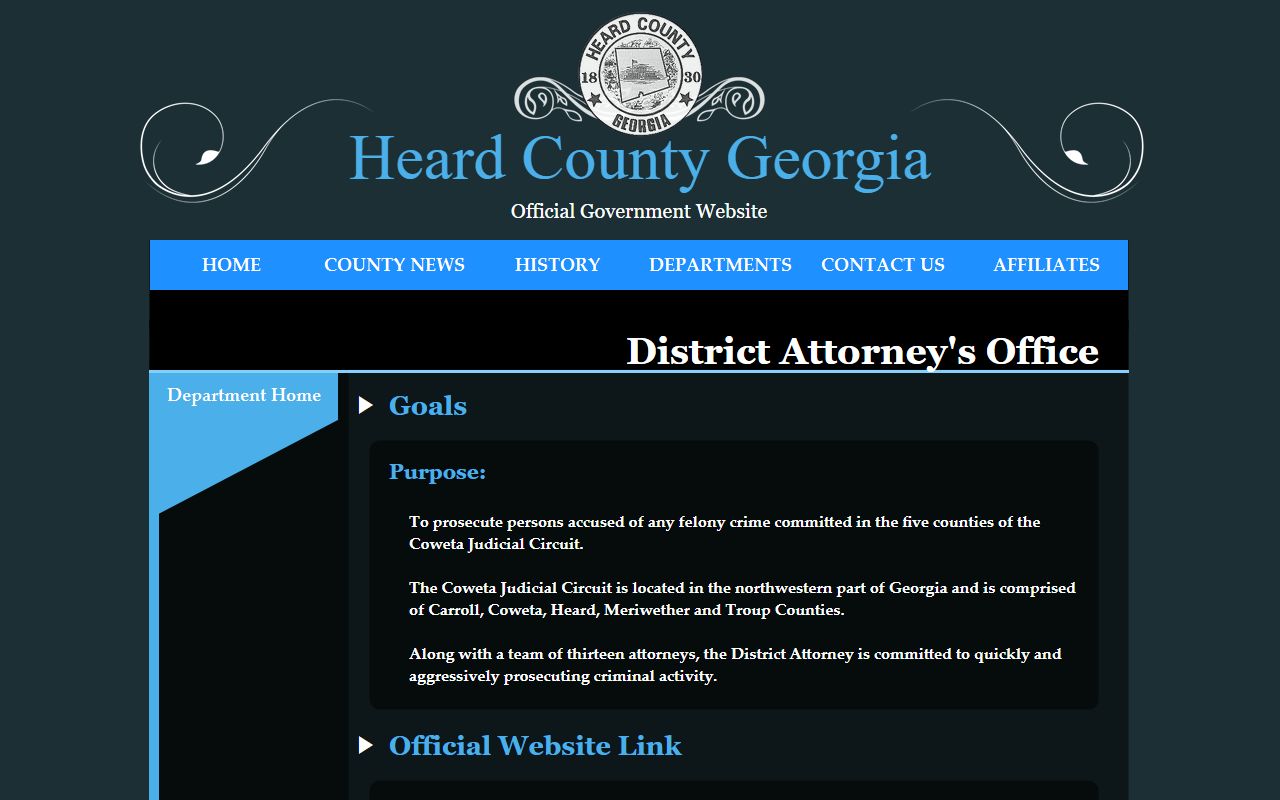
The prosecutor office is not the general case-file custodian, but it helps explain how criminal charges become court records.
Search Heard County Criminal Court Records
For Superior Court criminal case files, start with Georgia Courts E-Access and the Heard Superior provider route. The state page says users are redirected to provider websites and must have an account to search court records. If the case is not visible online, the local fallback is the Clerk of Superior Court at 215 East Court Square in Franklin.
- Confirm the case is a court case, not only a jail booking, incident report, or warrant inquiry.
- Use Georgia Courts E-Access for the Heard Superior provider path when the case belongs in Superior Court.
- Search by defendant name, case number, filing year, or known charge terms if the provider permits those fields.
- Review docket entries for arraignment, motions, pleas, disposition, sentence, and probation activity.
- Contact the Clerk of Superior Court for certified copies, older files, files not visible online, or sealing questions.
State criminal-history records are a different product. The GBI record restriction source explains access limits and restriction rules under Georgia law, but it is not a substitute for the Heard County criminal court file. A court file can show charges that were dismissed or changed. A statewide criminal history may apply separate reporting, restriction, and verification rules.
Heard County Criminal Case Flow
A criminal court file builds as the case moves. Early records may start with a warrant, bind-over, accusation, or indictment. The arraignment shows the formal plea stage. Pretrial entries show motions, continuances, discovery notices, bond changes, or plea talks. Later entries show a plea, trial result, dismissal, nolle prosequi, sentencing, probation, or revocation.
Case flow: Charges Filed › Arraignment › Pretrial / Motions › Plea or Trial › Disposition › Sentencing
| Stage | What Happens |
|---|---|
| Charges filed | The prosecutor files an accusation or indictment, or a matter reaches Superior Court after earlier warrant or preliminary steps. |
| Arraignment | The defendant is formally advised of the charge and enters a plea. |
| Pretrial / motions | The docket may show bond orders, discovery, suppression motions, continuances, and other case-management entries. |
| Plea or trial | The record shows whether the case resolved by plea, verdict, dismissal, or another disposition. |
| Sentencing | The court enters jail, prison, probation, fine, restitution, or other sentence terms when a conviction occurs. |
What Heard County Criminal Records Show
The criminal case file can show more than the charge name. It can show the charging instrument, count number, statute, bond conditions, plea, court dates, judge, prosecutor, defense attorney, disposition, sentence, probation, jail credit, and later revocation activity. A single arrest may produce several counts, and each count can have a different status.
| Field | What It Shows |
|---|---|
| Case number | The Superior Court tracking number used on docket entries, orders, notices, and copy requests. |
| Defendant | The person charged in the criminal case, with identifying details redacted where required. |
| Charges | Charge description, count number, statute reference when shown, severity, and any amendment or reduction. |
| Bond | Bond amount or release conditions, plus later changes if the court modified bond. |
| Plea | The plea entered at arraignment or later, such as guilty, not guilty, or nolo contendere when used. |
| Disposition | The outcome for each charge, including conviction, dismissal, acquittal, nolle prosequi, or other closure. |
| Sentence | Jail, prison, probation, fine, restitution, conditions, jail credit, and revocation activity where applicable. |
Charges vs Convictions in Heard County
Being charged is not the same as being convicted. A Heard County criminal court record can show a charge that was later dismissed, reduced, amended, nolle prossed, or resolved by acquittal. The disposition and sentence fields must be read before treating the record as proof of conviction. For the full set of civil, probate, traffic, and criminal file types, use the broader Heard County court records overview.
| Charge | Conviction | |
|---|---|---|
| Stage | An allegation filed by a prosecutor or returned by a grand jury. | A guilty plea, verdict, or qualifying court finding. |
| Record meaning | Shows what the state accused the defendant of doing. | Shows the case ended with guilt established for that count. |
| Outcome | Can be amended, reduced, dropped, dismissed, or tried. | Can lead to sentencing, probation, fines, restitution, or later revocation. |
Prosecutor and Defense Records Context
Heard County's official District Attorney page still contains older Coweta Judicial Circuit wording, but current state sources place Heard in the new West Georgia Judicial Circuit. Governor Kemp's November 15, 2024 announcement named Sarah Stimac Japour as District Attorney for the West Georgia Judicial Circuit. The DA files and prosecutes felony charges, but the court clerk remains the general custodian for filed court records.
The Public Defender page lists the local public defender office at 215 East Court Square, and the Georgia Public Defender Council lists Heard County in the West Georgia Circuit. Eligible indigent defendants use the public defender for representation. The public defender is not a public record search office, but counsel may hold case information for represented clients.
The manifest image for the Governor's West Georgia Circuit DA announcement documents the current prosecutor reference.
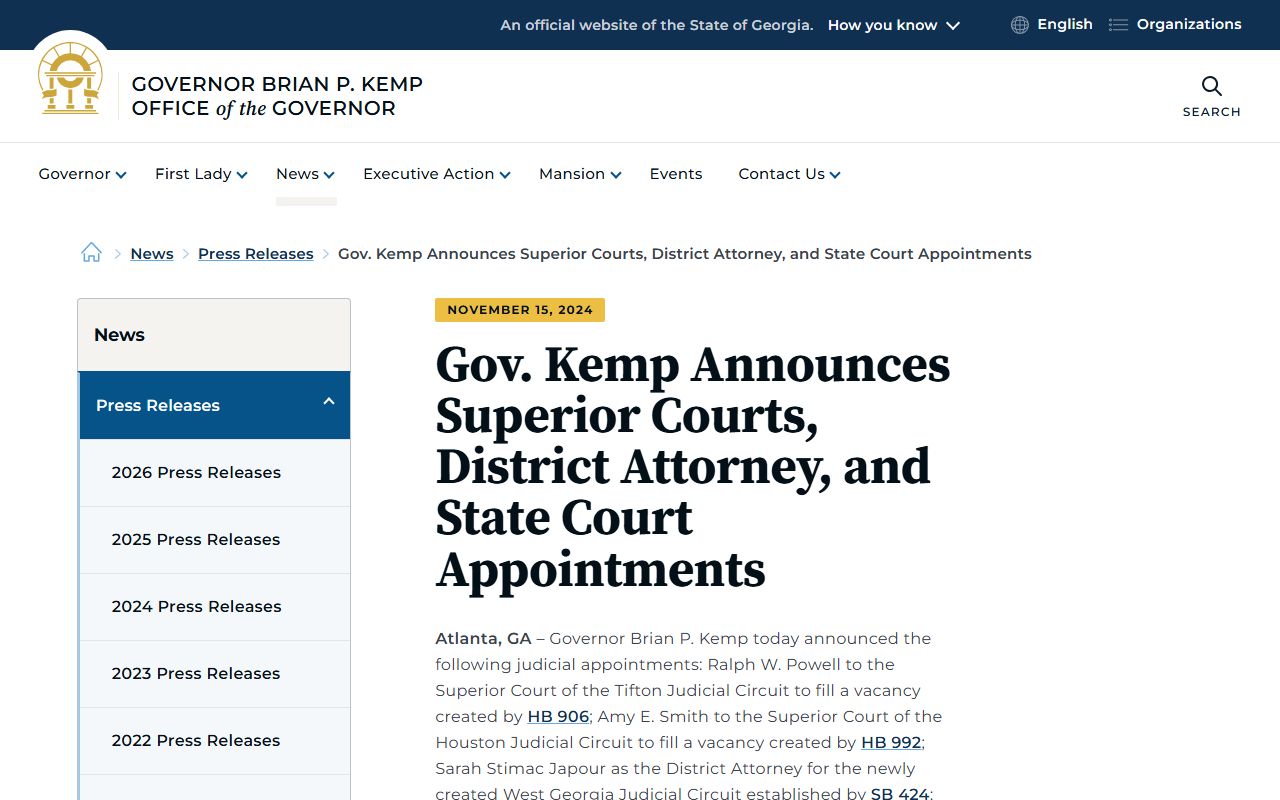
The announcement is useful because it reconciles the circuit change with older county page language.
The manifest image for the Heard County Public Defender page shows the local defense office for eligible criminal defendants.
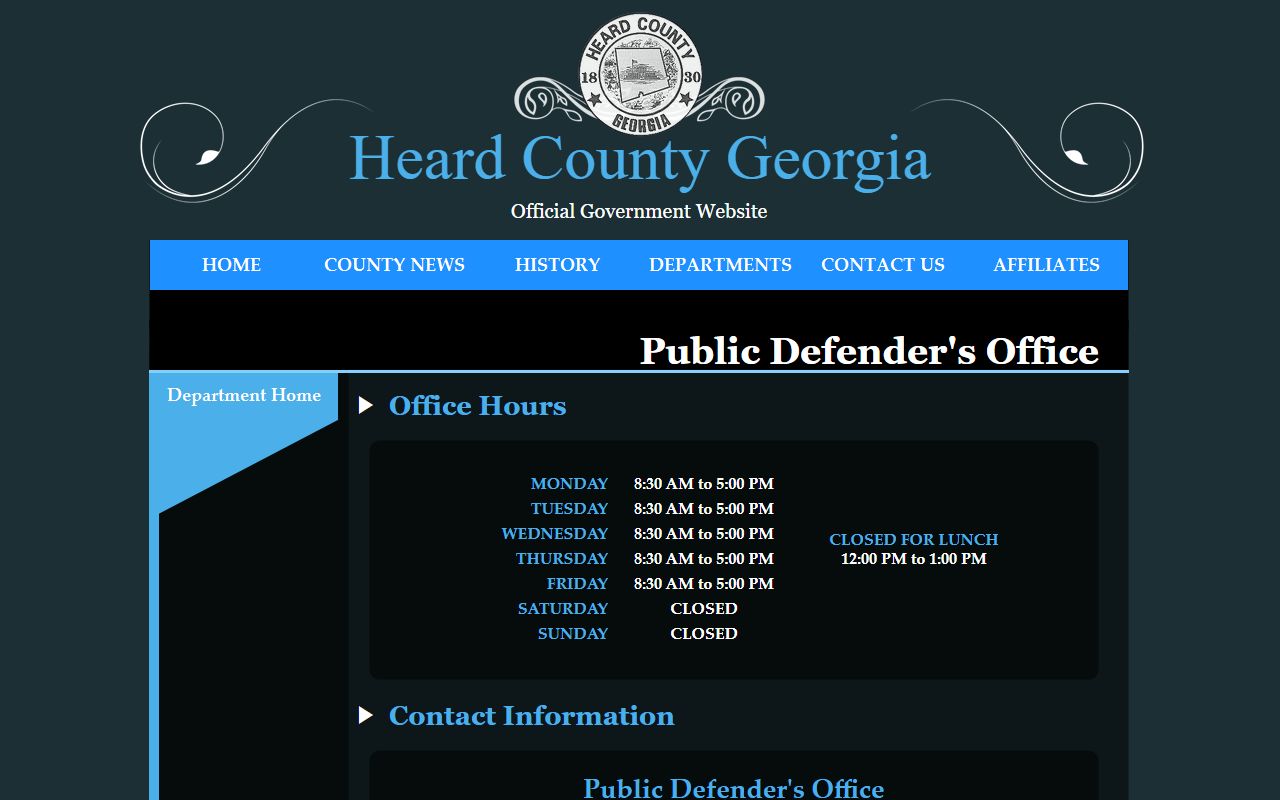
Defense office information helps interpret the criminal case process, but filed records still route through the court clerk.
Sealed and Restricted Criminal Records
Georgia commonly uses record restriction language for limiting criminal-history access. The GBI page explains that O.C.G.A. 35-3-37 provides a process for restricting certain criminal history records from non-criminal-justice access. For arrests after July 1, 2013, the research notes no GBI application process and directs the person to contact the prosecutor. For arrests before that date, the person starts with the arresting agency.
| Sealed or limited court access | Georgia record restriction | |
|---|---|---|
| What changes | Public access to a court file or filing is limited by law, rule, or order. | Non-criminal-justice access to qualifying criminal history is limited under Georgia law. |
| Where to start | The court that keeps the file, often Superior Court for felony cases. | The prosecutor for many post-July 1, 2013 arrests, or the arresting agency for older arrests. |
| What remains | Courts and authorized parties may still see or use records allowed by law. | Law-enforcement and criminal-justice access may remain even after restriction. |
The manifest image for the GBI criminal-history record restriction page supports the Georgia-specific restriction discussion.
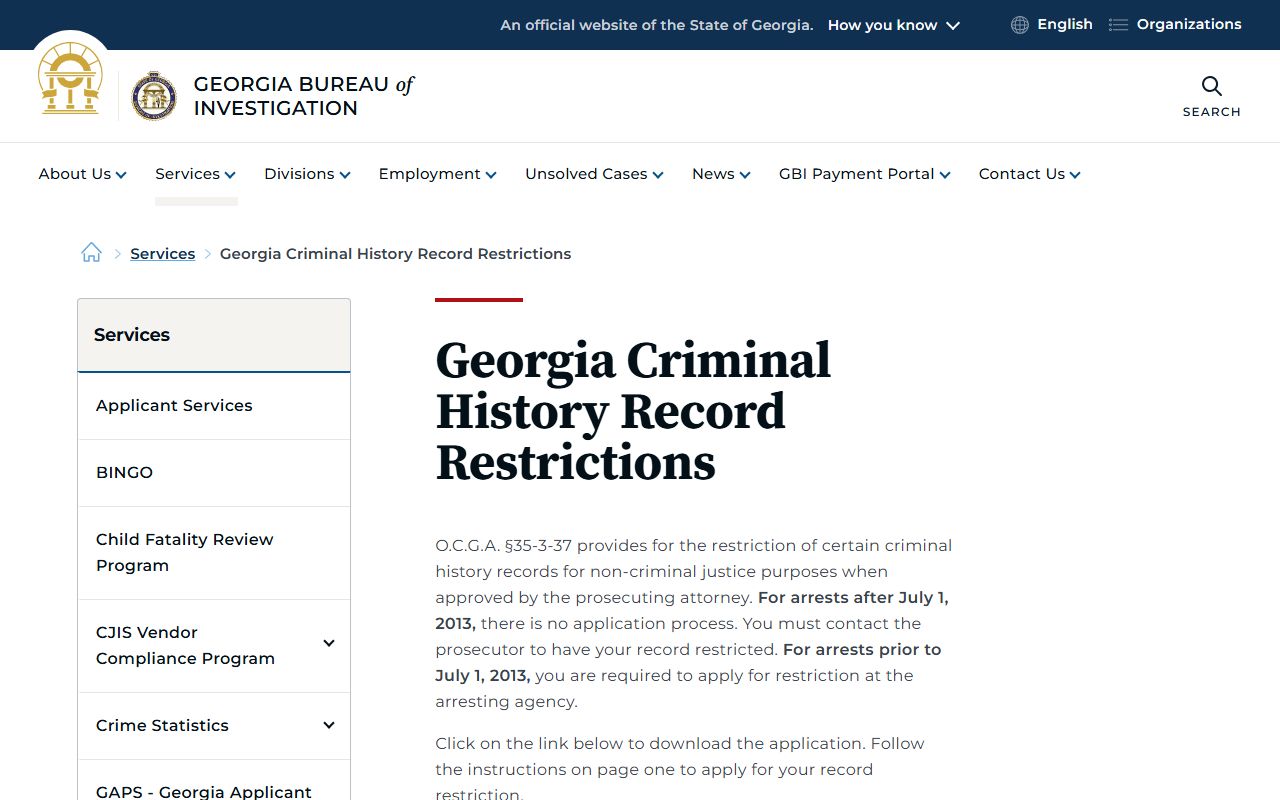
Record restriction does not rewrite the court's history of every event; it changes public access under defined Georgia criteria.
Public Access to Heard County Criminal Records
Criminal court files are generally public unless a statute, rule, or order limits access. Georgia's Open Records Act, O.C.G.A. 50-18-70 et seq., supports public access to government records, while O.C.G.A. 50-18-72 allows exemptions and redactions. Uniform Superior Court Rule 21 governs limits on access to Superior Court files. Juvenile matters, sealed filings, protected addresses, Social Security numbers, medical details, and active investigative material may be withheld or redacted.
Requesters should use the office that owns the record. The Clerk of Superior Court is the records contact for filed felony case documents, docket copies, certified copies, and sealing questions in Superior Court cases. The Sheriff's Office is the better source for booking or jail custody records. The District Attorney can explain prosecution status for involved parties and counsel, but the DA is not the public copy counter for the filed court case. The county open-records form can help route requests that do not clearly belong to one office, yet certified court copies should still come from the court clerk.
When reading a criminal record, avoid treating a charge list as a background-check conclusion. A dismissed count, nolle prosequi entry, acquittal, or amended charge changes the meaning of the record. Sentencing and probation entries may also change after revocation or modification. The safest record request includes the defendant name, case number if known, filing year, charge name, and whether the requester needs a certified disposition.
Note: A criminal case docket may be public even when specific filings or personal identifiers are redacted.
The manifest image for the Georgia Public Defender Council Heard County listing confirms the West Georgia public defense context.
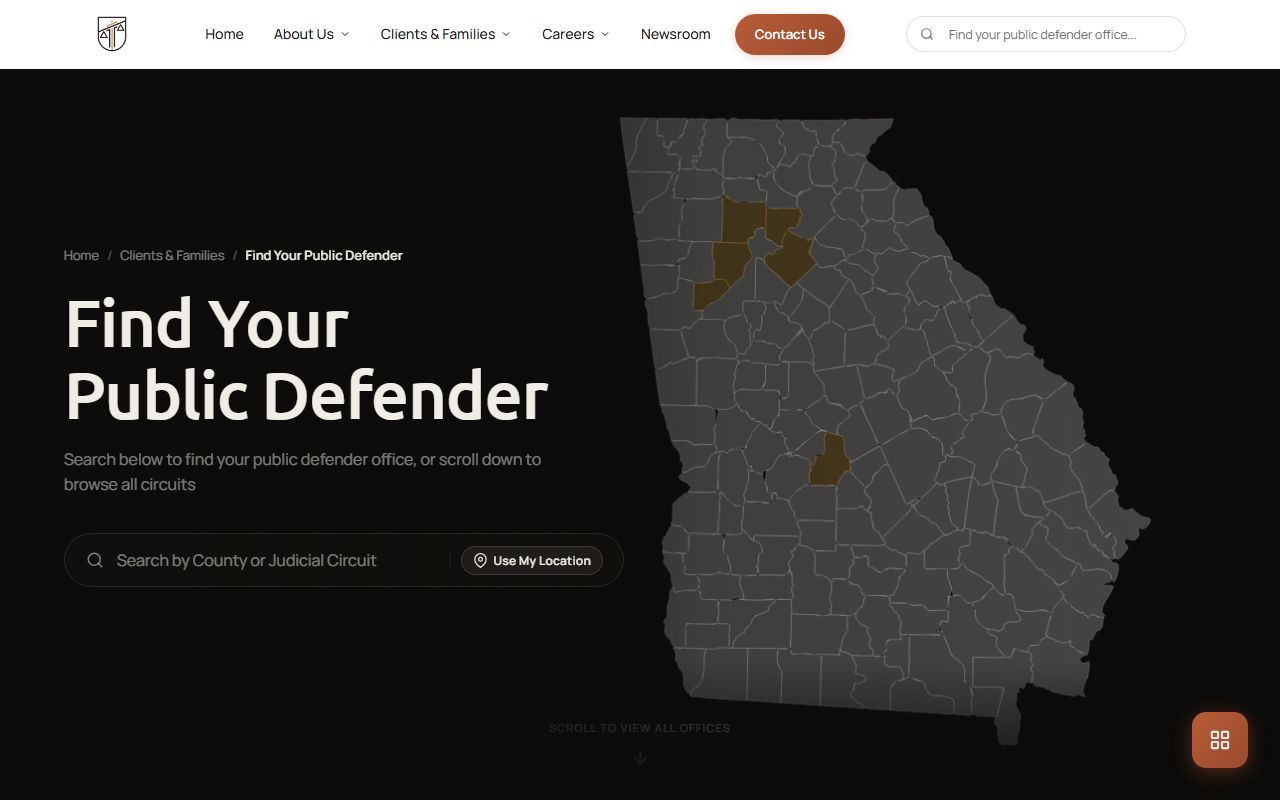
That listing is part of the criminal justice access picture, while court record copies remain a clerk function.