
What Is a Heard County Court Docket
A docket is the running list of events in a court case. It can show when a complaint, petition, accusation, indictment, citation, motion, order, hearing notice, plea, disposition, or judgment was entered. It is not the same as the full court record. The docket is the index and timeline. The case file is the set of documents behind many of those entries.
That distinction matters in Heard County because the county does not publish one universal docket screen. Superior Court docket access can begin with Georgia Courts E-Access and its provider route. Probate Court, Magistrate Court, and Juvenile Court maintain separate local functions. Municipal traffic or ordinance dockets may be outside the county site when a city issued the ticket.
- Docket
- A chronological list of filings, hearings, orders, and case actions.
- Entry
- One line on the docket, such as a filed motion, hearing notice, continuance, or order.
- Disposition
- The current or final outcome of a case or charge.
- Continuance
- A hearing or deadline that was moved to a later date.
Find Heard County Court Dockets Online
For Superior Court docket information, start with Georgia Courts E-Access. The state access page routes users to court-record providers and notes that account access is required. Heard Superior is tied to the PeachCourt route in the research. If a docket is not visible through the provider path, the Clerk of Superior Court remains the local records contact.
- Start by identifying the court and case type. Superior, Probate, Magistrate, Juvenile, and Municipal Court matters do not all share one docket source.
- For Superior Court, use the Georgia Courts E-Access provider route and expect account setup.
- Search by the most exact information available, such as case number, party name, defendant name, or filing year.
- Read the docket entries in date order and compare each entry with any notices or orders already received.
- Ask the keeping court for copies when an online docket entry refers to a document that is not visible online.
The manifest image for Georgia e-file payment and filing shows the e-filing environment linked from Heard Magistrate Court.
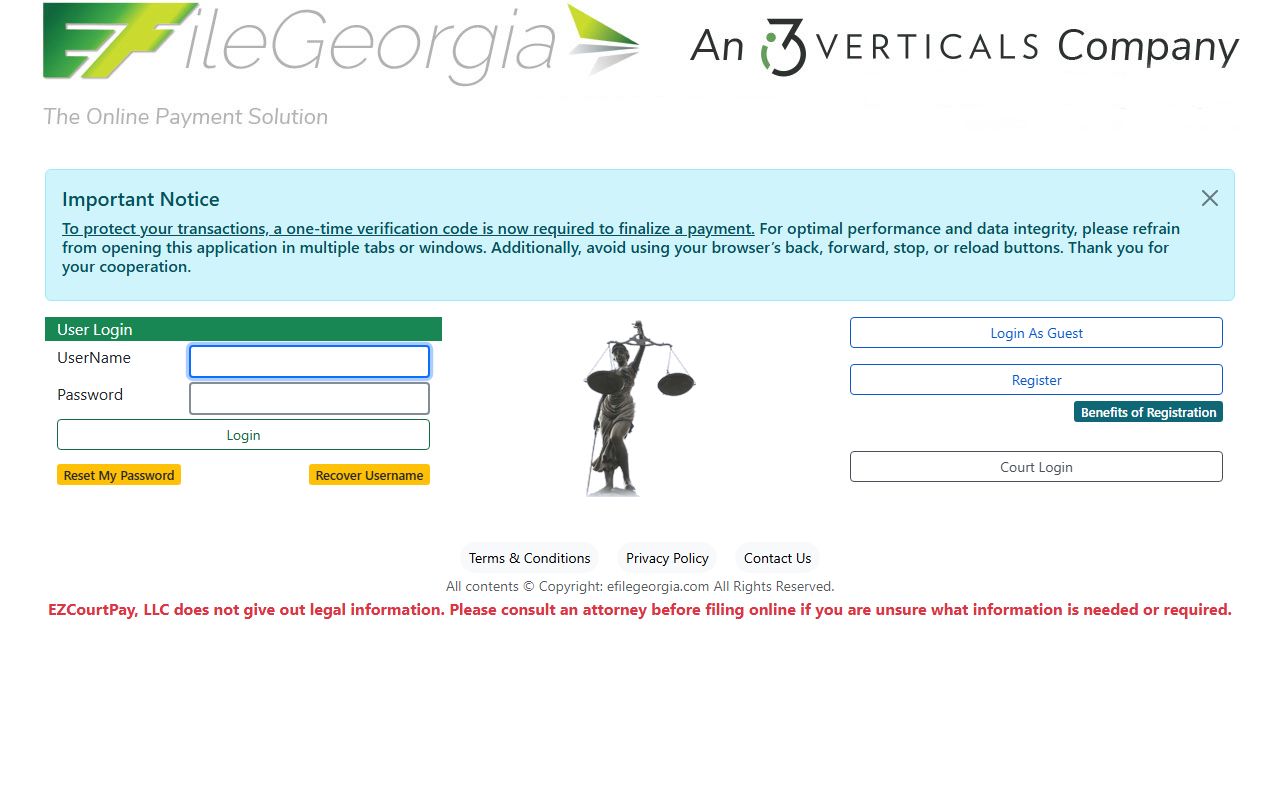
E-filing and docket access are related but not identical. A filing system may help submit papers, while docket details still depend on the court record system and clerk access.
Sample Heard County Docket Entries
No public sample Heard Superior docket entry was opened during research without provider login. The field inventory below uses the researched Georgia court-record fields and docket terms that are typically present in a docket or clerk printout, while avoiding any claim that these fields appear in a free Heard County portal.
| Field | What It Shows |
|---|---|
| Entry date | The date a filing, hearing notice, order, payment, plea, or other action was entered on the docket. |
| Event type | The kind of action, such as complaint filed, arraignment, motion, continuance, order, judgment, disposition, or sentencing. |
| Party filing | The party, lawyer, prosecutor, agency, or court officer associated with the entry when the system captures it. |
| Hearing date | The date and time of a scheduled court event, plus location or judge information when available. |
| Disposition | The current outcome or final status, such as dismissed, guilty plea, judgment entered, closed, or transferred. |
| Document reference | A link, document number, or clerk reference to a filed paper, if the provider or court allows document access. |
Heard County Docket Sources by Court
Heard County's docket sources mirror the Georgia court structure. Superior Court is the general-jurisdiction trial court and is now part of the West Georgia Judicial Circuit. Probate Court, Magistrate Court, Juvenile Court, and municipal courts handle narrower matters. A docket search works best when the requester starts with the court that had authority over the case.
| Court | Docket or record role | Access channel |
|---|---|---|
| Superior Court | Felonies, divorce, equity, title-to-land issues, major civil matters, and lower-court review. | Georgia Courts E-Access provider route or Clerk of Superior Court. |
| Probate Court | Wills, estates, guardianships, conservatorships, marriage licensing, vital records, weapons licensing, and county traffic citations. | Probate Court counter, mail, phone, and linked online services for traffic and selected applications. |
| Magistrate Court | Small civil claims, dispossessory cases, warrants, bond matters, preliminary hearings, and local magistrate functions. | Magistrate Court office and Georgia e-file links from the county page. |
| Juvenile Court | Delinquency, truancy or unruly matters, and dependency cases involving minors. | Restricted access through court authorization or permitted parties. |
| Municipal Court | City ordinance and many city traffic matters where a city court exists. | Verify with the issuing city or the citation because county pages do not list a municipal docket table. |
The manifest image for the Carroll County Superior Court page helps document current West Georgia Judicial Circuit context for Heard County dockets.
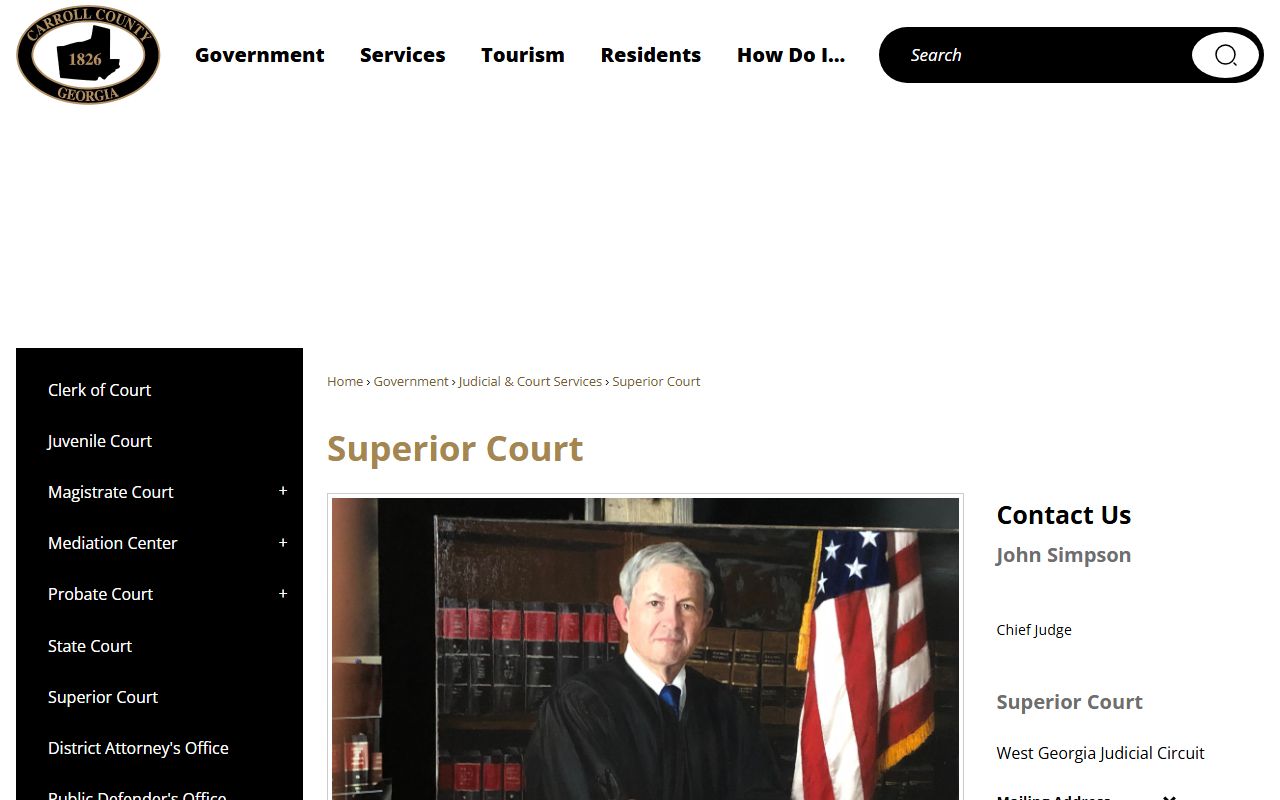
That circuit context is important because some Heard County pages still contain older Coweta Judicial Circuit language.
Heard County Dockets vs Case Records
The docket can tell a user that an order was entered, a hearing was continued, or a plea was recorded. The case record may hold the signed order, the motion, the plea form, exhibits, financial documents, or certified decree. For quick status checks, the docket may be enough. For filing proof, appeal review, legal analysis, or certified copies, the full case record is usually needed.
| Docket | Full Case Record | |
|---|---|---|
| Format | List of dated entries and events. | Filed papers, orders, notices, and supporting documents. |
| Use | Track case status, hearing dates, and key milestones. | Review legal content, obtain certified copies, or prove the exact order entered. |
| Access | May appear online through a provider or clerk printout. | May require provider account access, copy fees, or a direct clerk request. |
| Limits | May omit document text or sealed details. | May include redactions or be restricted by court order, juvenile law, or privacy rule. |
The full Heard County court records file may be needed when a docket entry is not enough to show what the court ordered.
West Georgia Circuit Docket Context
Heard County is now part of the West Georgia Judicial Circuit with Carroll County. The research notes that older Heard County pages still refer to the Coweta Judicial Circuit, but later official sources place Heard in the West Georgia Judicial Circuit. Governor Kemp's November 15, 2024 announcement appointed Sarah Stimac Japour as District Attorney for the new West Georgia Judicial Circuit, and Carroll County official sources list West Georgia Circuit judicial contacts.
For docket searches, the circuit change does not move Heard County case files out of the local court office. It does affect circuit-level judge, prosecutor, and administrative references. If a docket notice, old case paper, or county page uses older Coweta language, verify current hearing or prosecutor information with the Clerk of Superior Court, the West Georgia Circuit contact source, or the office that issued the notice.
The manifest image for West Georgia Circuit judicial contacts supports the circuit-level docket context.
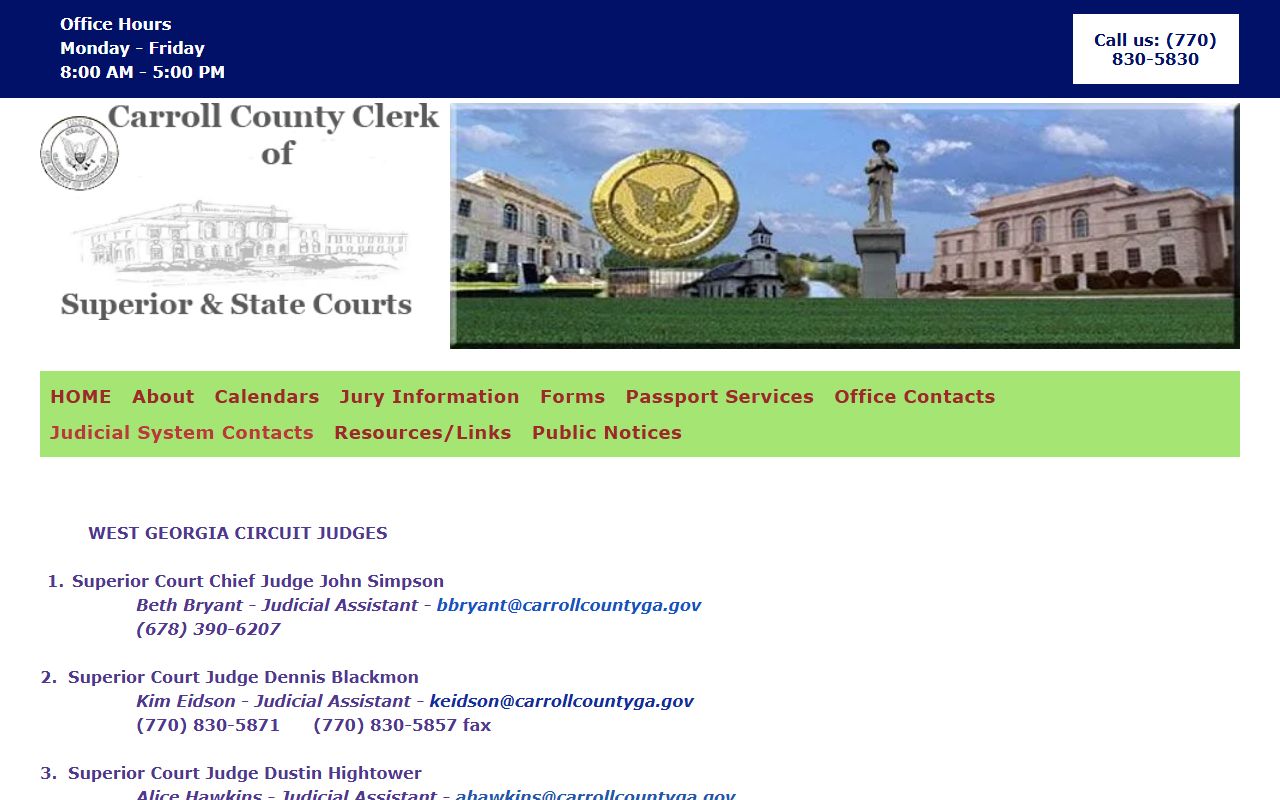
Circuit information is useful for hearings and judge assignments, while the local court office remains the records source.
Read Heard County Court Dockets
Read docket entries from oldest to newest. Early entries often show the filing document and service attempts. Middle entries may show motions, orders, hearings, continuances, bond events, pleas, or notices. Later entries may show judgment, sentence, discharge, dismissal, transfer, or closure. If a docket shows several charges or claims, read each line separately because one count can be dismissed while another remains pending or ends in a plea.
Common words need plain meaning. Arraignment is the hearing where a defendant enters a plea. Disposition is the current or final result. Bond is money or conditions used to secure appearance. Judgment is the court's final decision on a civil claim or issue. Certified copy means a copy with the clerk's certification and seal.
Older docket entries may require direct clerk help. A provider search can miss paper-era files, sealed references, older case numbers, or documents that were never made available through the public provider workflow. When calling a Heard County court office, give the party names, approximate year, court type, and any number printed on a notice, citation, bond paper, or receipt. For traffic dockets, check whether the citation names Heard County Probate Court, EZCourtPay, or a municipal court before assuming the county probate office has the whole history.
Request wording matters. Ask for a docket sheet when the goal is the timeline, and ask for a specific order, judgment, sentence, decree, or certified copy when the actual filed paper is needed. That helps the Clerk of Superior Court, Probate Court, or Magistrate Court quote the right copy process and avoids treating a docket entry as if it were the full record.
For juvenile docket questions, call the court instead of assuming public access.
Docket users should also separate a scheduling entry from a final order. A hearing notice means a case event was set. A continuance means it moved. A signed order, judgment, sentence, or dismissal entry is the stronger signal that the court acted on the case. If the docket wording is unclear, ask for the underlying document or a clerk explanation of the entry label.
Note: A docket may show that an order exists without showing the order text or certified copy.
The manifest image for CourtListener shows a free docket and opinion resource that can help with broader legal research.
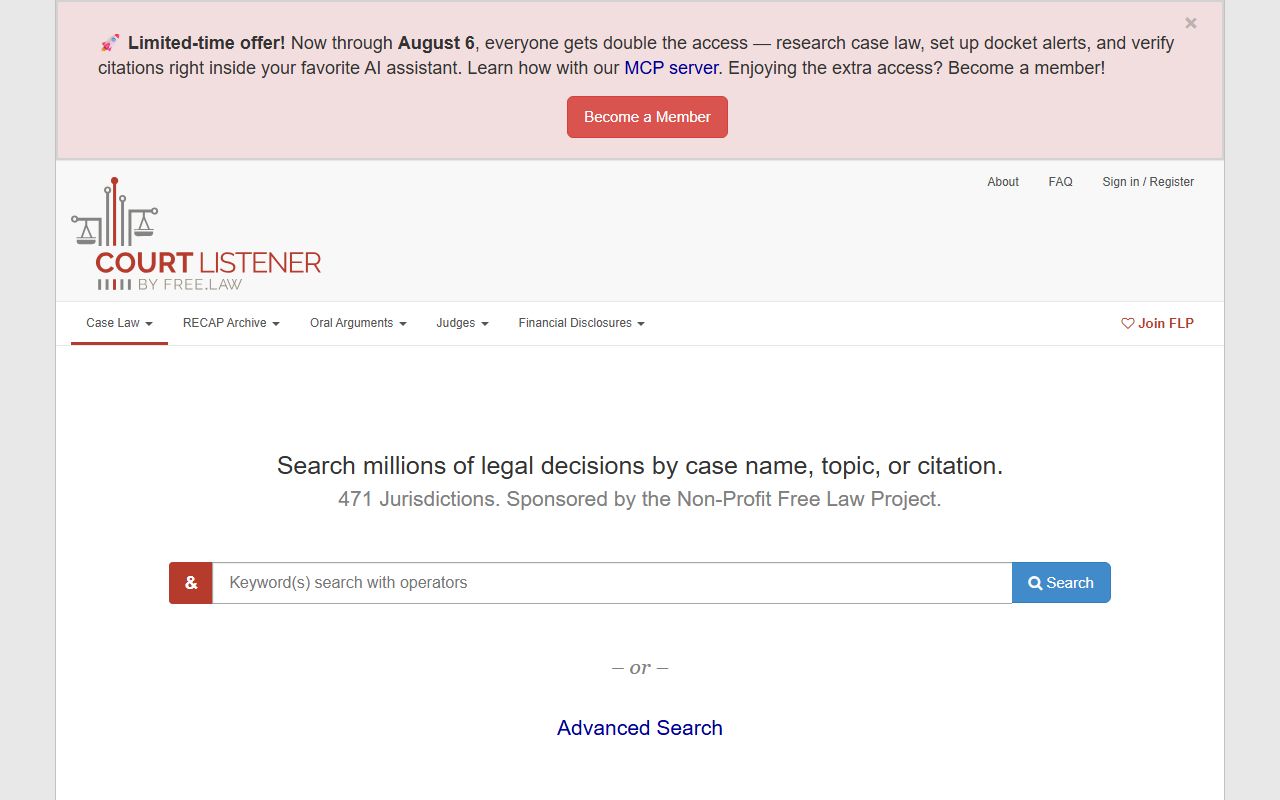
CourtListener is not a complete replacement for Heard County clerk or provider access, but it can help identify opinions or selected public docket material.